Realizations From Winning a Hackathon: Importance of Mobile in Fashion & Luxury
Winning “Best Application Award” at the Hackathon
Some of the greatest products are made from the unlikely combination of two seemingly disparate fields. Velcro and dynamite, though they might be considered more “accidental discoveries” than anything, highlight how innovation can come about when cross-pollinating ideas. When I was at IDEO, considered one of the world’s most innovative design companies in the world, I came to acribe to their “human-centered design” method to solving problems. Applying this philosophy to how I approach business, design, and even academics has been one of my most empowering ideologies.
Last week I had the opportunity to be part of an amazing experience – the 2012 PennApps Hackathon, self-proclaimed as the largest student-run hackathon in the nation, and with over 140 entrants and news outlets like TechCrunch and Wired covering the event, just being able to witness the event unfold was really inspiring (though mostly filled with sleep-deprived face-palming and non-stop working).
What is a hackathon? If you’re not a programmer, you might be inclined to recall that scene from The Social Network where a bunch of nerds engineers drink booze and code all night long for glory and honor! Well, not totally off the mark. At its most basic level, a hackathon is an event where programmers collaboratively build programs or application within a specific period of time to encourage innovation, fun, and networking. The PennApps Hackathon is a 48-hour hackathon (meaning we only had a paltry two days to make something from scratch) done in teams of up to four people to make an application (not a program).
Ok but first, pause a bit. You might be thinking why I would be involved in a hackathon. Sure, I can do minimal front-end work with PHP, CSS, and HTML. But start asking me to incorporate more advanced coding like jScript and jQuery and you’ve lost me. Admittedly, when I was approached by a friend to be involved in the process I was wondering why ask me to join. In a 48-hour time frame, in which every second counts (and trust me, every second did count, we submitted our code 5 minutes before the deadline), you’d want as much coding resource and expertise as possible.
There is a danger to that mindset though, as my friend reminded me. From his experience, when four programmers get together to make an application, they think the same way, their strengths are multiplied but so are their weaknesses. And oftentimes they just mash functions and APIs to make what they think is interesting from a technical standpoint, but from a user point of view is a Frankenstein-like product with poor user experience and design. Why I was asked to participate in a hackathon was not to be a programmer, but to give a unique design direction and shape product development from a user experience perspective. (Which harkens us back to the philosophy of “human-centered design” and the need for cross-pollination of fields.)
Ultimately, we created a drink discovery application for the Android phone that lets you discover mixed drinks through fun experimentation. You can check out the site we made (it’s on Tumblr since Tumblr was a sponsor for the competition) here and hopefully it will be available to download one day! The application won the Best Mobile Application Award, which was amazingly humbling and exciting for our team. Everything from the user interface (UI), graphics, mock ads, site, and even wording are part of a cohesive aesthetic direction (I opted for a more playful 1960′s cocktail era feel). This is important because the application’s front-end design is critical to user perception of the application and even a small inconsistency in this can absolutely ruin everything (branding operates in a similar way). The user experience was designed around optimizing ease of use and intuitive functionality that doesn’t require any explanation to use while still offering a robust and powerful experience for users. In other words, we took a cue from Apple and tried to make the application as simple to use as possible – minimal user pathways while still providing powerful functionality. For us, this meant the user being able to consistently discover new drinks and being able to share new recipes and ideas with friends.
Fashion & Digital: A Rocky Marriage
Creating a mobile application for this hackathon made me wonder why we didn’t see more mobile applications in the fashion arena. It isn’t all too surprising though, fashion has been notoriously bad at integrating technology. Social media and fashion makes so much sense from a content distribution perspective and even from a sales perspective, yet brands have been woefully slow at capitalizing on the trend. Even worse were brands trying to fight against the digital transformation and magazines seeing social media as an “us vs. them” situation when in reality it should have been a question of how to integrate the digital into the analog world of print.
Mobile (smartphone) is one of the fastest growing sub-sectors of the digital era. The mobile market is one of the fastest in the world, with its growth even surprising Google, with 42% of consumers already owning smartphones and 84% of those users actively use their phone while shopping in-store (Deloitte’s 2011 Holiday Survey). The Mobile World Congress provides these additional statistics that should give us all pause:
- Smart phone sales are projected to exceed global PC sales by 2014
- Mobile search and web use is growing 8x faster than the equivalent point 10 yrs ago for computers
- Half of new online connections are from mobile devices
Questioning the recent L2 report published on Mobile IQ for prestige brands, Marketing VOX noted that despite the celebration of successful case examples in the industry, there is an overall underinvestment in the mobile sphere from luxury/fashion brands:
The IQ distribution reveals a significant, widespread underinvestment in mobile, as nearly half the brands were designated as feeble. The report found that only two-thirds of prestige brands maintain a mobile-optimized site, and one-third of these mobile development efforts do not yet support commerce. Also, while 70% of brands have mobile apps, fewer than 20% of brands have created unique app content for tablet devices such as the iPad, which register high usage among affluent consumers.
There is a huge market opportunity in digital for fashion, and within digital, the lowest hanging fruit is clearly mobile. Especially with the boom in tablet devices, fashion brands should be strongly considering how to integrate their marketing and even sales operations with their mobile strategy. But of course, you need a mobile strategy to begin with (something I fear some brands don’t even have yet).
Remember my philosophy of cross-pollination innovation? Fashion and mobile is an area ripe for this kind of innovation. Human-centered design in fashion might seem strange, given that fashion has historically been a form of art-centered design; but in the right context, an anthropological approach to fashion lets us think critically about how people can interact with fashion through the mobile and digital medium. This mindset will enable designers and retailers to create powerful new ways for fashion brands to create a new revenue stream, gain brand exposure, and engage with consumers in a fundamentally new and powerful way.
Top 10 Trends & Ideas for the Fashion World In 2012
If fashion were a novel, 2012 marks the start of a new chapter for designers, bloggers, and industry members alike. Whether you’re in Florence at Pitti or back in New York planning for Fashion Week (don’t forget, the schedule for IMG is officially up) there’s excitement in the air. Here’s a list of ideas and stories you should be tracking as 2012 unfolds:
1. High-End Designers Move Downmarket
- Thakoon’s Thakoon Addition
- Derek Lam’s 10 Crosby
- Karl Lagerfeld’s Karl
- Victoria Beckham’s Victoria
- Matthew Williamson’s MW by Matthew Williamson
- Balmain’s Pierre Balmain
- Marni’s Marni Denim
- Hussein Chalayan’s Chalayan Grey
Designer collaborations with the likes of Uniqlo, H&M, and Macy’s made big news last year and it seems over the past couple of seasons more and more designers are trying to get a piece of the collaboration scene. Last year’s big names were Missoni for Target and Versace for H&M collections but let’s not forget Karl Lagerfeld for Macy’s and Giambattista Valli for Macy’s. Up and coming is Marni at H&M, another Versace collaboration at H&M, and Jason Wu for Target.
From a business perspective, a collaboration makes sense for smaller designers who may not have the manufacturing and distribution resources of a larger retailer like H&M or Target. As designers increasingly favor the use of collaboration lines and as more and more retailers offer to work with designers (would love to see AllSaints come in here), I’m both excited and scared to hear about what new lines await us as matchmaking intensifies between retailers and designers.
3. Entertainment Tries To Move Somewhere with Fashion
Well, while fashion is moving all over the place this year, entertainment is trying to also cash in on fashion. From Project Runway’s All Stars to Joe Zee’s All on the Line, Americans are loving the rise of “fashion entertainment”. This is a lovely trend indeed for most fashion icons, because trying to get more popular exposure seems to be second nature (present company not necessarily excluded). Designers and fashion icons seeking ways to get involved in Hollywood fret not. Already we have or will soon be watching Lifetime’s 24 Hour Catwalk (hosted by Derek Blasberg and Cynthia Rowley), NBC’s Fashion Star, ABC’s Jane by Design, and Bravo’s It’s a Brad, Brad World.
Maybe it will be the evolution of fashion’s street style. Could you imagine reality TV around the lives of fashion bloggers?
4. Stealth Wealth & Subdued Product Design
Occupy Wall Street reminded us of issues facing our society vis-a-vis income inequality and wealth distribution. In politically sensitive times, consumers are more conscientious of how they present themselves in the face of their social circles and the public. In an era of online shopping where many consumers already indicate that they prefer shopping from the privacy of their homes and as American markets become increasingly sophisticated in their fashion taste (moving away from branded replenishment accessories to actual fashion pieces) the fashion world will need to pay increasingly attention to shopper preferences for product design. Consumers will turn away from ostentatious display of wealth, instead opting for more unbranded items and pieces that to the untrained eye will not appear to come from any designer.
5. Continuing Expansion in China
China continues to represent one of the fastest growing markets in world across industries but especially for fashion. As China’s wealth grows, so does demand for access to luxury. And when Chinese cultural norms make it acceptable and even important for both men and women to carry bags as a status symbol, fashion labels are completely enamored with the China market. Of course, rapid expansion has its own problems and as brands venture to a new country, poor planing, miscommunication, and cultural misunderstandings are common obstacles.
Brands are still trying to perfect their China strategy but in the meantime we can learn from the mistakes of other brands – some more obvious than others.
6. While Thinking More about Brazil
Brazil, while not getting as much attention in the global market as China, is also part of the Big Four. While fashion media has focused its attention primarily on China, we should not forget the huge market opportunities in Brazil as well. Indeed, over 30 brands are already set to open news stores in Brazil including Prada, Dolce & Gabbana, and Fendi.
Of course, just like in China, expanding to a new country has great upside but also has its own pitfalls. Among other potential problems, brands must be cognizant of the dangers of licensing as a means to expand to new markets, localization issues, and cultural differences.
7. Private Sales Model Evolution
While Gilt Groupe’s success continues to enthrall business professional across industries as an amazing success story, they are still not profitable. And with more and more start ups going the private sales route, the increasing saturation of Gilt Groupe copycats does not necessarily bode well for anyone with a similar business model. Even more problematic is that brands are tightening inventory thanks to better supply chain planning. As the economy improves and overstock decreases even more, private sales sites will need to evolve their model to accomodate changing market conditions.
8. Fashion Bloggers & SOPA
SOPA, the bill that will definitely censor and restrict the way you can access the internet, will have a very real impact on fashion bloggers and social media if it passes. Hopefully, we will be able to update this list in the future with a giant cross-out on this item, but for now SOPA threatens to force fashion bloggers to be more cognizant of where their images and content comes from as they now risk an entire site shutdown if a copyright holder complains.
Even barring passing of the bill, SOPA has reminded the industry of the increasingly difficult nature to track copyright and protect it. Fashion digital content is no different. As the blogging phenomenon is made more accessible with sites like Pinterest and Tubmlr, fashion copyright seems like an extinct creature in the 21st Century. However, bills like SOPA are attempts to address copyright violations. How will the fashion industry follow suit? Will sites that make money by publishing fashion images like Style.com and spend money buying rights to the images try to restrict content being taken from its site?
9. Traditional Media Integrating With Social & Digital Media
As traditional print media continues to decline in both readers and ad revenues, fashion magazines must continue to innovate their business model in order to stay relevant. Fashion magazines reluctantly inserted themselves into the digital world, but now appear to be embracing the trend. Last year, we saw more and more magazines establishing a presence in social media, creating a digital version of their magazine (with online-only content), and even introducing iPad applications for their publication. More creative ideas include 3-D content, fashion films, and moving fashion images.
This year will be no exception to the trend, as more magazines strengthen their digital position, but also be on the lookout for continued business innovation. Magazines are looking to collaborate with the entertainment industry as well as incorporate an element of e-commerce to boost their revenue through new streams.
10. Will Dior Ever Make a Choice?
Vera Wang to Shift Market Focus: From High Fashion to Mass Market
Despite the fact that Wang is only the most common last name is China, some people make the really awesome mistake of asking me if Vera Wang is my mother. And while my dream would be one day to take an awkward family photo with my dearest mother Vera, my brother Alexander, and me, I’ll settle with considering Vera Wang’s (who is?) recent decision to reposition her brand from luxury bridal gowns to mass-market ready-to-wear (thank you total non sequitur).
Vera currently has a three-fold market distribution strategy that focuses on the high-end market, the upper-middle tier of aspirational consumers, and the mass-market. Vera Wang and Vera Wang Bridal focus on the upper-end of the market, while Lavender Label targets an aspirational segment that lies between affordable and luxury prices. At the mass-market level, Vera has Simply Vera, several licensing deals, and several other diffusion lines like White by Vera. (Note: As much as I generally dislike how diffusion lines dilute brand equity, Simply Vera has worked wonders for Kohl’s.)
This distribution strategy seemed to work fine until the global recession came around and shook up the entire market. Now, Vera is opting to shift her focus from high-end downmarket to where Lavender is currently positioned. The upper-middle tier is an increasingly popular niche for fashion brands to target with prices ranging from the hundreds to low thousands as the economy is slowly recovering and consumers regain an appetite for fashion. To reinforce this change, Lavender is now going to be called “Vera Wang” (the current name for her high-end label). Her upper-end line will be renamed “Vera Wang Collection”.
When talking to the WSJ, Vera Wang Group’s president, Mario Grauso, noted that Vera Wang’s upper end line wasn’t producing the profit margin he’d like to see:
“There’s much less of a customer for Collection…The cost is enormous. I don’t make money doing it. I lose a lot.”
This is a common scenario for fashion brands. While brand equity is built from designer collections, revenue is driven downmarket from lower end lines. In fact, most high end labels lose money on the collection, but make up for it via perfumes, bags, and accessories (most of which they don’t even produce and design in-house).
Of course, there is a careful balance that needs to be made between aggressive sales through lower end lines and maintaining an exclusive, high-end image. While Grauso is correct in asking the rhetorical question:
“How many women are really interested in clothes off the runway that are a little challenging and weird-looking?”
The point is not that women are really interested in buying the clothing from the runway, but that they fantasize about being able to afford a gorgeous and almost theatrical Vera Wang dress then buy something from Lavender to satiate that dream.
The Vera Wang Group is charting through an exciting time as it considers how to best grow. The brand is expected to reach $1 billion in revenues this 2012 and this new market strategy should help them reach this point. I fundamentally agree with Vera Wang’s strategy, but the devil is in the details. Can she grow her RTW label without alienating her traditional consumer base upmarket? Can she grow sales down market without deteriorating her strong brand image? Will Vera ever agree to pretend to be my mother for a day? Questions, questions.
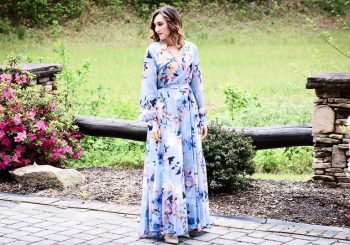
Image: Vera Wang Resort 2012 (source: Style.com)